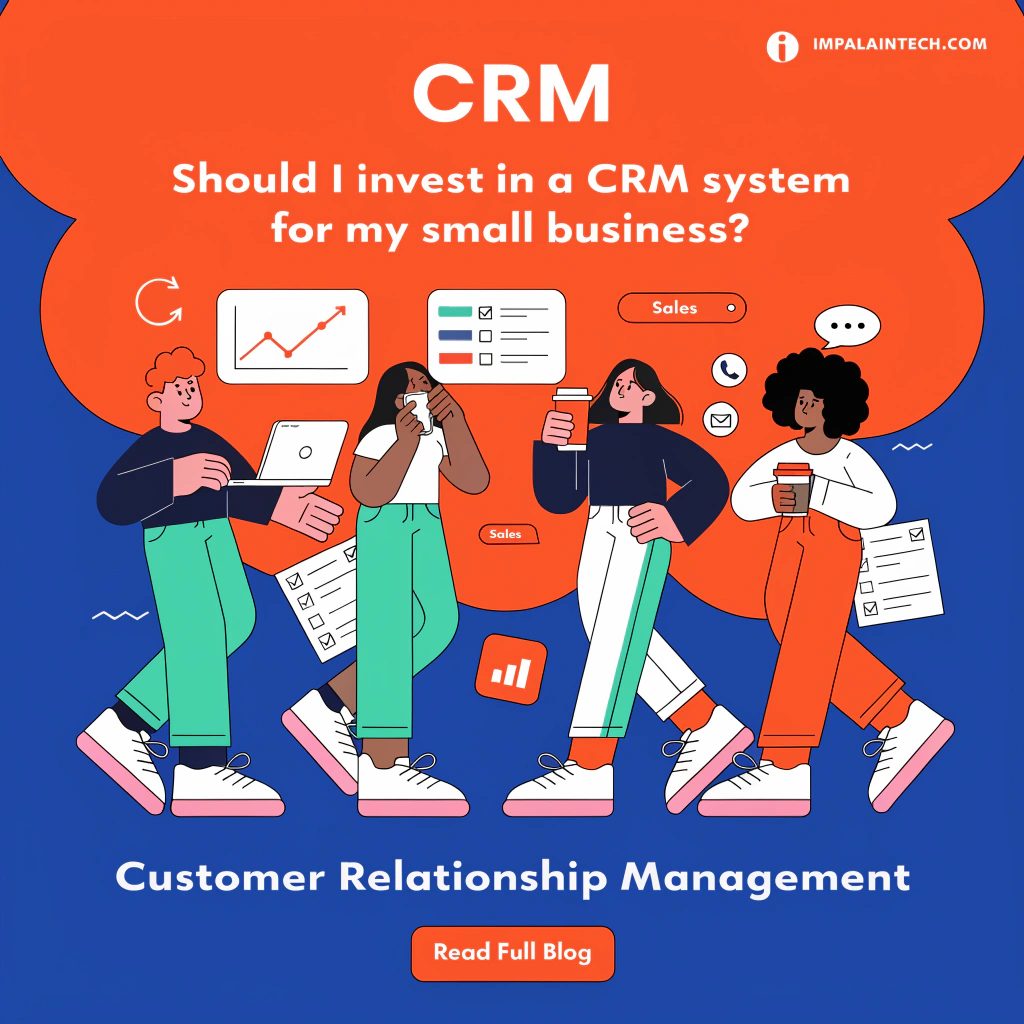
Many small business owners reach a point where things feel messy. Leads come in from different places. Conversations happen over email, calls, and messaging apps. Important details sit in different files.
At first, this feels manageable. Over time, it starts to slow everything down. This is where the question comes up. Should you invest in a CRM system?
The short answer is yes, but only if it fits your business and stays simple to use. A well-built system can help you track leads, manage clients, and improve sales without adding extra work.
At Impala InTech, we often speak with business owners who have already tried basic tools but still face gaps. The issue is not always the idea of a CRM. It is how the system is designed and used.
Is Investing in a CRM System Cost-Effective for Small Businesses?
Cost is usually the first concern. Many small businesses hesitate to adopt CRM because they see it as an extra expense. A better way to look at it is in terms of lost opportunities.
We have developed some of the best CRMs for construction companies and other industries. It gave us immense experience and the ability to understand complex business needs.
From our knowledge, missed follow-ups, delayed replies, and poor tracking often lead to lost deals. These losses add up over time. A simple CRM helps reduce these gaps.
For example, one small service business we worked with handled all leads manually. They often forgot to follow up after the first call. After setting up a basic CRM system, their follow-up rate improved. Within a few months, they started closing more deals without increasing their marketing spend.
The cost of the system stayed lower than the revenue gained from better conversions.
This shows that a CRM becomes cost-effective when it improves how you handle existing leads.
What Is the Typical Cost of a CRM System for a Growing Business?
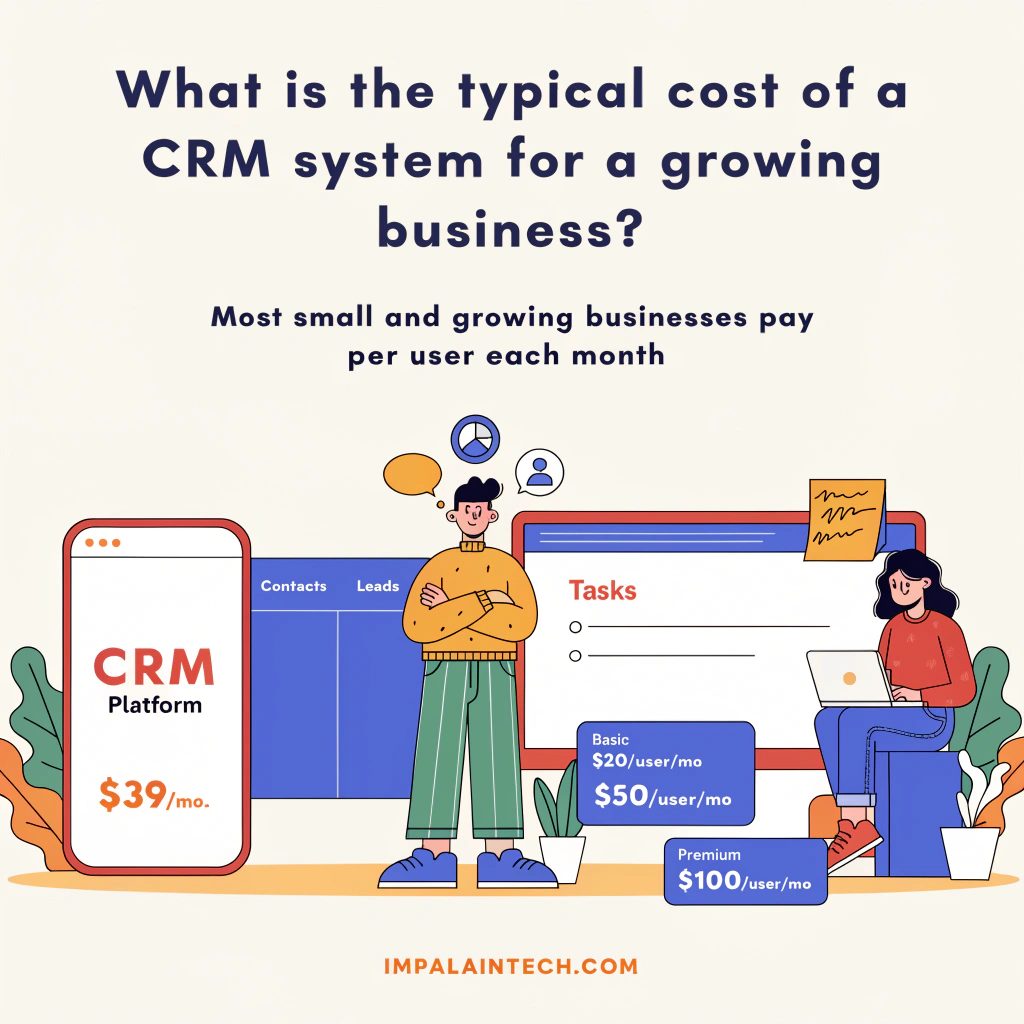
The cost of a CRM system varies based on features, users, and complexity. Most small and growing businesses pay per user each month.
- Basic CRM tools usually cost between $10 and $30 per user per month.
- Growing businesses often spend around $50 to $150 per user for better features.
- Some advanced systems can go beyond $300 per user, especially with automation and integrations.
These prices only cover software. Extra costs often include setup, customization, and training. Studies show that hidden costs can increase total CRM spending by up to 30% to 100%.
Another key insight shows that the average business spends around $75 per user monthly across popular CRM tools. This is why many small businesses feel confused. The base price looks low, but real costs grow over time.
However, we are one of the most affordable CRM solution providers for companies with fewer employees. We are also reputed in the market for on-demand implementations.
How Does Custom CRM Development Compare in Cost?
A custom CRM does not follow per-user pricing. It depends on your business needs and system complexity.
At Impala InTech, we keep pricing flexible and practical for small businesses.
Here is a general idea based on common project types:
- Basic CRM (lead tracking + pipeline): starts from $1,500 to $3,000
- CRM with automation and integrations: $3,000 to $7,000
- Advanced CRM with reporting and custom workflows: $7,000 to $15,000+
These are one-time development costs. You avoid monthly per-user charges that increase over time.
For many growing teams, this becomes more cost-effective within the first year.
What Results Can You Expect From This Investment?
A structured CRM often improves response time and follow-up consistency.
Faster responses alone can increase conversion rates significantly in competitive markets.
We worked with a small business that switched from spreadsheets to a custom CRM.
They improved follow-up consistency and increased conversions by nearly 30% in three months.
Another client reduced manual work by more than 40% after automation was added.
These results come from a better structure, not just software.
Want a Clear Idea of the Cost for Your Business?
Every business has a different workflow, and there are some of the best practices to design a startup crm workflow. A fixed price rarely fits all cases. A short discussion can help you understand what type of CRM you actually need and what it may cost.
At Impala InTech, we focus on simple and affordable solutions that deliver real results. If you are planning to invest in a CRM, this is the right time to explore a system built for your business.
How Does a Customer Relationship Management System Improve Sales for a Small Company?
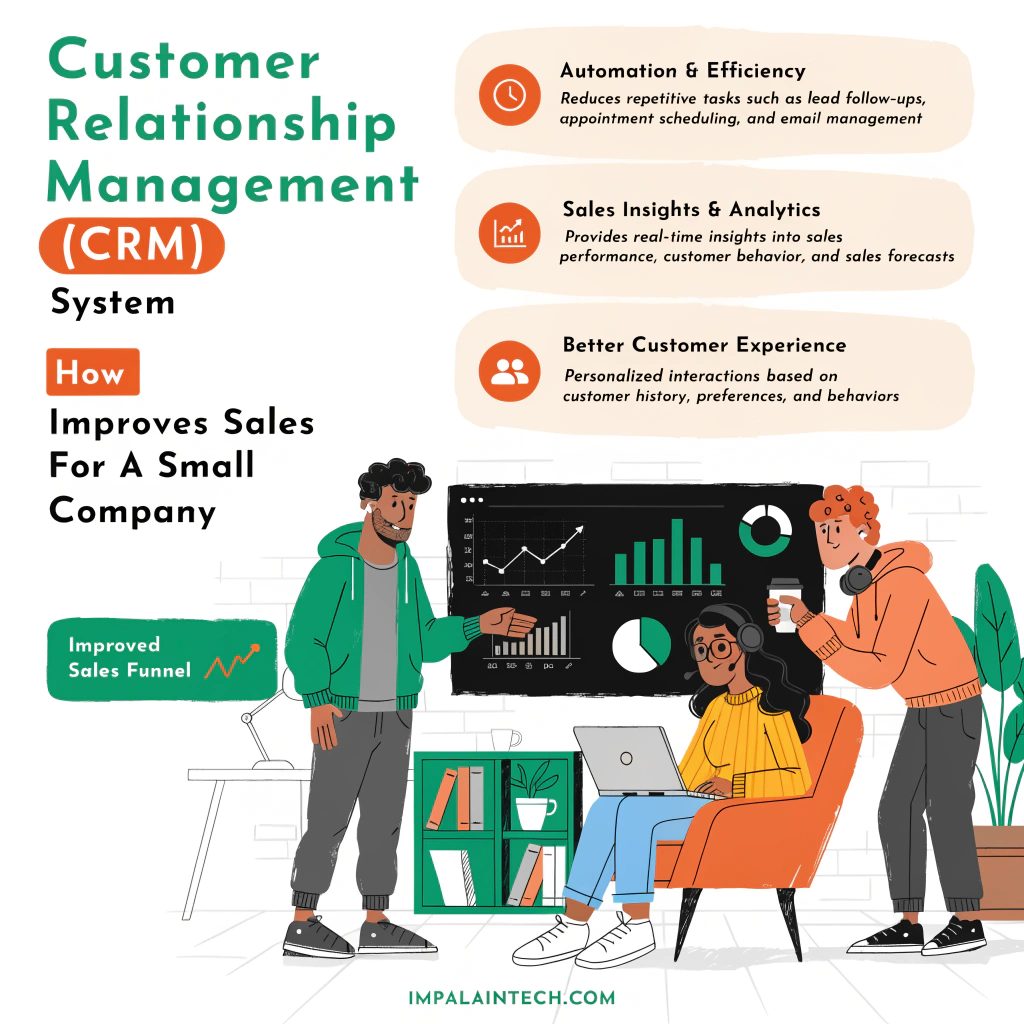
Sales improve when processes become clear and consistent.
A CRM gives structure to your sales flow. Every lead enters the system, gets tracked, and moves through defined steps. This removes guesswork.
It also helps with timing. Faster responses often lead to better results. A CRM can remind you to follow up at the right moment.
Another benefit is visibility. You can see which leads are active, which ones need attention, and where deals are getting stuck.
We worked with a small agency that struggled with tracking conversations. Their team often repeated questions or missed details. After implementing a simple CRM, they could see the full client history before each call. This made conversations smoother and more focused.
Within two months, their conversion rate improved because they handled leads more professionally.
What Problems Does a CRM Solve for Small Teams?
Small teams face a unique challenge. They handle multiple roles at once. This makes it easy to lose track of information.
A CRM helps bring everything into one place.
Instead of switching between tools, you can manage leads, clients, and follow-ups from a single system. This reduces confusion and saves time.
It also helps with accountability. Each task can be assigned and tracked. This ensures that nothing gets missed.
At Impala InTech, we focus on building systems that stay simple for small teams. The goal is not to add complexity but to remove friction from daily work.
When Does a Small Business Outgrow Basic Tools?
Spreadsheets and manual tracking work in the early stage. Problems start when the volume of leads increases.
Signs that you have outgrown basic tools include delayed responses, difficulty tracking conversations, and lack of clear sales data.
At this stage, a CRM becomes more than helpful. It becomes necessary.
We have seen businesses struggle for months trying to manage growth with manual systems. Once they switch to a structured CRM, they often see quick improvements.
Compare Cloud-Based Client Management Platforms for Small Teams
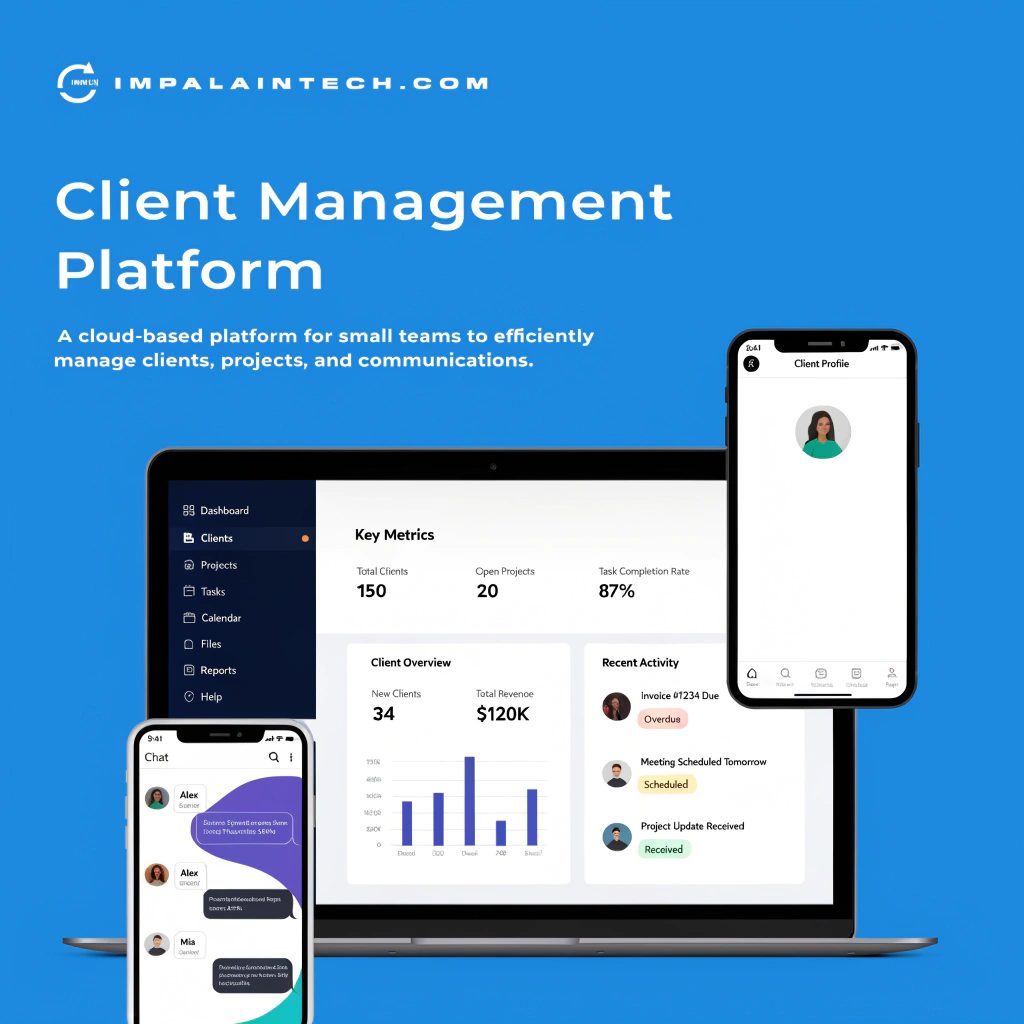
Cloud-based CRM platforms are popular because they are easy to access and require no heavy setup. Small teams can start quickly and scale as needed.
Here is a comparison of some common options:
| Platform | Best For | Strengths | Limitations |
|---|---|---|---|
| HubSpot | Beginners | Free plan, easy interface | Limited customization in free version |
| Zoho CRM | Flexible teams | Limited customization in the free version | Can feel complex at first |
| Pipedrive | Sales-focused teams | Clear pipeline view | Limited marketing tools |
| Freshsales | Small businesses | Simple automation | Fewer integrations compared to others |
| Salesforce | Growing businesses | Powerful and scalable | Higher cost and setup effort |
Each platform works well in different situations. Many small businesses start with one of these tools.
Still, as workflows become more specific, these tools may not fully match business needs. This is where custom solutions come in.
Why Do Many Small Businesses Move Toward Custom CRM Solutions?
Off-the-shelf tools offer general features. They work for a wide range of businesses, but may not fit your exact process.
Custom CRM solutions focus on your workflow.
At Impala InTech, we often work with businesses that have tried multiple tools but still feel something is missing. They needed better tracking, simpler processes, or specific features that standard tools did not offer.
A custom system solves this by aligning with your business instead of forcing you to adjust.
It also helps reduce unnecessary steps. This makes the system easier to use and more effective.
How Have Custom CRM Solutions Delivered Real Results?
We worked with a small consulting firm that struggled with lead management. Their team used email and spreadsheets to track conversations.
We built a simple CRM tailored to their workflow. It included lead tracking, follow-up reminders, and a clear pipeline view.
Within a few weeks, their response time improved. They started following up more consistently. Over the next quarter, their conversion rate increased by around 30%.
Another client needed better reporting. They wanted to understand where leads were dropping off. We built a system that tracked each stage clearly.
This helped them adjust their approach and improve performance.
These results show that the right system can make a measurable difference.
What Should You Consider Before Investing in a CRM?
Before choosing a CRM, it helps to understand your needs.
Think about how you handle leads today. Identify where delays or confusion happen. This will guide your decision.
Ease of use is also important. A system that feels complicated will not get used properly.
You should also consider growth. The system you choose should support your business as it expands.
A simple and flexible approach works best.
How Can Impala Intech Help Your Small Business?
Choosing or building a CRM can feel confusing. There are many options, and not all of them fit your business.
At Impala InTech, we focus on practical solutions. We study how your business works and build a system that supports your process.
We keep the system simple, affordable, and easy to use. You can start with basic features and expand over time.
If you are unsure whether a CRM is right for your business, a quick discussion can help clarify your needs.
A well-designed system can improve how you manage leads, communicate with clients, and close deals.
FAQs

Can a CRM reduce the need for hiring more staff?
Yes, in many cases. A structured system improves efficiency, so small teams can handle more leads without extra hires.
What is the difference between paying monthly vs building a CRM once?
Monthly tools spread cost over time, but increase as your team grows. A custom CRM is a one-time investment with long-term value.
Will a CRM help improve client trust and professionalism?
Yes. Faster responses and organized communication make your business look more reliable and prepared in front of clients.
How risky is it to switch from manual systems to a CRM?
The risk is low if the system is simple and well-planned. Most businesses see quick improvements after switching.