

Startups often focus on growth first. Leads come in from different channels, and the team tries to manage everything at once. At this stage, many founders rely on spreadsheets, emails, and memory.
This works for a short time. As the number of leads grows, the process begins to break down. Follow-ups get delayed. Some leads are forgotten. Sales become inconsistent.
A clear CRM workflow solves this problem. It brings structure to how leads are captured, handled, and converted.
At Impala InTech, we have worked with startups at different stages. One pattern stays the same. Startups that build a simple, structured workflow early tend to grow faster and miss fewer opportunities.
What does a CRM workflow actually mean for a startup?
A CRM workflow is the step-by-step process that moves a lead from first contact to a closed deal. It defines what happens at each stage and who takes action.
For a startup, this means clarity.
Every lead follows a path. Every team member knows what to do next. Nothing depends on memory.
A simple workflow may include stages like new lead, contacted, interested, and closed. Each stage has clear actions attached to it.
This structure helps teams stay organized even with limited resources.
How can Impala InTech help you build the right CRM workflow?

Designing a CRM workflow requires both technical and business understanding. It is not just about software. It is about how your team works.
At Impala InTech, we focus on building practical solutions. We study your workflow, identify gaps, and create a system that fits your process.
We keep CRM systems affordable and scalable. You can start with essential features and expand as your business grows.
If your startup struggles with lead management or follow-ups, a structured CRM workflow can make a real difference.
A quick discussion with our team can help you understand what changes will bring the best results.
How should a startup structure its CRM workflow from the beginning?
A strong workflow starts with understanding how leads enter the system and how they move forward.
First, define all lead sources. This could include website forms, ads, referrals, or direct calls. All these sources should feed into one system.
Next, create a clear pipeline with simple stages. Each stage should represent a real step in your sales process.
Then, assign actions to each stage. For example, a new lead should receive a quick response. An interested lead may need a follow-up call. We at Impala InTech have helped businesses in construction have one of the best crm systems from the very beginning.
This structure removes guesswork. The team knows exactly what to do at each step.
What are the essential stages in a startup CRM workflow?
A startup does not need a complex pipeline. A few clear stages are enough to manage most deals.
A typical workflow includes:
- New lead
- First contact completed
- Qualified or interested
- Proposal or discussion
- Closed deal
Each stage should reflect real progress, not just labels.
Keeping stages simple improves visibility. It also helps teams move leads faster.
How important is response time in a CRM workflow?
Response time plays a major role in conversion.
Leads expect quick replies. A delay of even a few hours can reduce interest. Startups that respond faster often win more deals, even with fewer resources.
A structured workflow helps improve response time. It ensures that every new lead receives attention without delay.
Automation can support this process. Simple actions like instant replies or task reminders help teams stay consistent.
How can automation improve a startup’s CRM workflow?
Automation handles repetitive tasks and keeps the workflow moving.
It can send initial responses, assign leads to team members, and create follow-up reminders. This reduces manual effort and improves speed.
Still, automation should stay simple. Too many automated steps can create confusion.
A balanced approach works best. Let automation handle routine tasks while the team focuses on building relationships.
Why do most startup CRM workflows fail in the early stage?
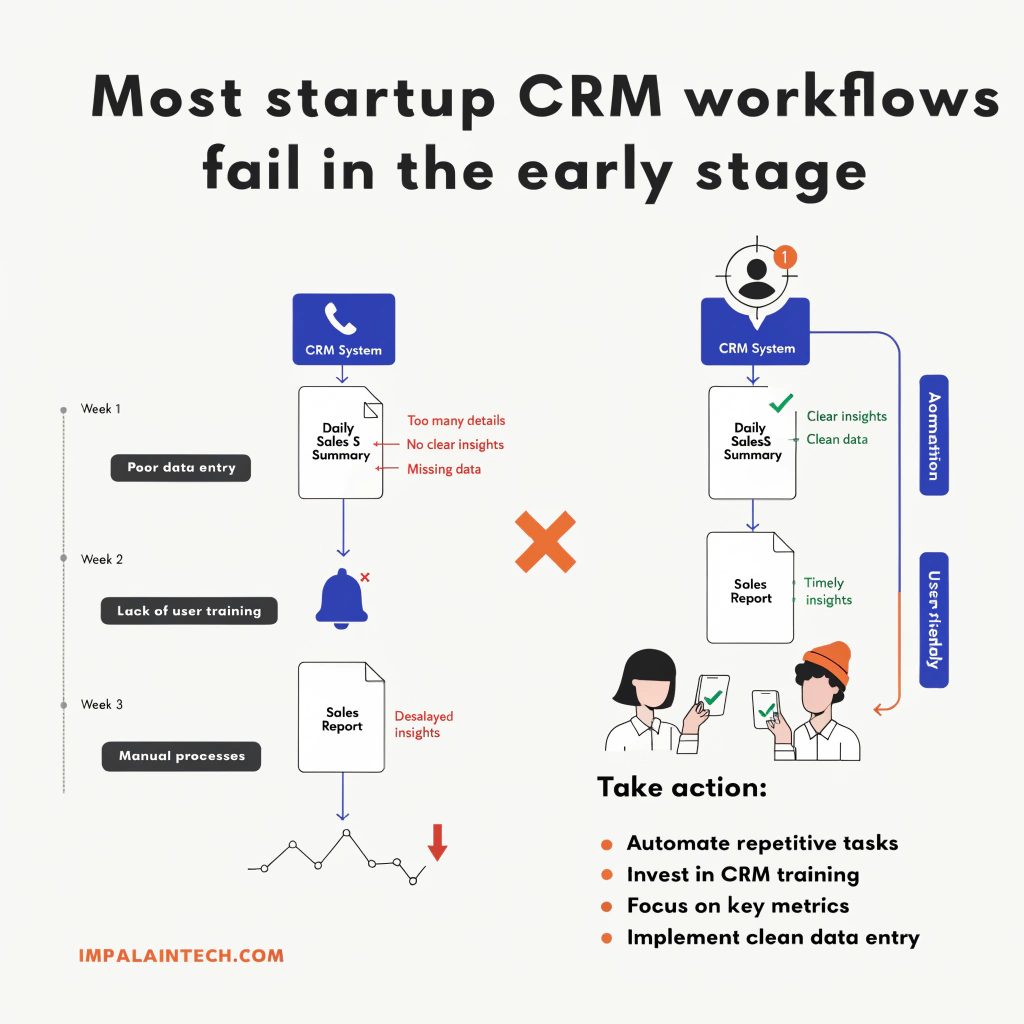
Many startups adopt a CRM tool but do not define a clear workflow. They add contacts but do not build a process around them.
This creates confusion. Leads sit in the system without movement. Follow-ups happen randomly.
Another common issue is overcomplication. Some teams try to copy enterprise-level workflows. This adds too many steps and slows down the process.
Lack of adoption also plays a role. If the system feels difficult to use, the team avoids it.
A working workflow should stay simple, clear, and easy to follow. If you are just a startup, you won’t have to break the bank. You can opt for cheap CRM as a startup first, and get in touch with us for consultation.
When should a startup consider a custom CRM workflow?
Many startups begin with ready-made CRM tools. These tools offer basic features but may not fit every workflow.
As the business grows, gaps start to appear. Teams may need better tracking, specific automation, or clearer reporting.
This is the point where a custom solution becomes valuable.
A custom CRM workflow adapts to your process. It removes unnecessary steps and adds features that match your needs.
At Impala InTech, we often help startups at this stage. We analyze their existing workflow and build a system that improves efficiency without adding complexity.
How have custom CRM workflows improved results for startups?
We worked with a startup that handled leads from multiple channels. Their team struggled with follow-ups and tracking progress.
We designed a custom workflow that integrated all lead sources into a single system. We also added simple automation for responses and reminders.
Within a few weeks, the team saw changes. They responded faster and handled leads more consistently.
Over the next three months, their conversion rate improved by nearly 35%. They also reduced the time spent on manual tracking.
Another startup needed better visibility into its sales process. We built a system with clear pipeline stages and reporting.
This helped them identify weak points and improve their strategy. Their deal closure rate increased steadily over time.
These results show how a structured workflow can create real impact.
What mistakes should startups avoid while designing a CRM workflow?
Some common mistakes can reduce the effectiveness of a CRM workflow.
Many startups try to include too many stages. This makes the system hard to use.
Others skip training, which leads to poor adoption. A workflow only works if the team follows it. For example, we have worked with some real estate crm systems with integrated lead generation.
Some teams also ignore data quality. Incomplete or incorrect data affects decision-making.
A simple and clean approach works best. Focus on clarity and consistency.
How can startups keep their CRM workflow flexible as they grow?
Growth brings new challenges. A workflow that works today may need changes in the future.
Startups should review their workflow regularly. Small updates help keep the system aligned with business needs.
A flexible system allows easy changes. New stages, rules, or integrations can be added without disrupting the process.
Custom solutions support this flexibility better than rigid tools.
At Impala InTech, we build systems that evolve with your business. This helps startups scale without rebuilding their entire workflow.
Why should startups invest in a well-designed CRM workflow early?
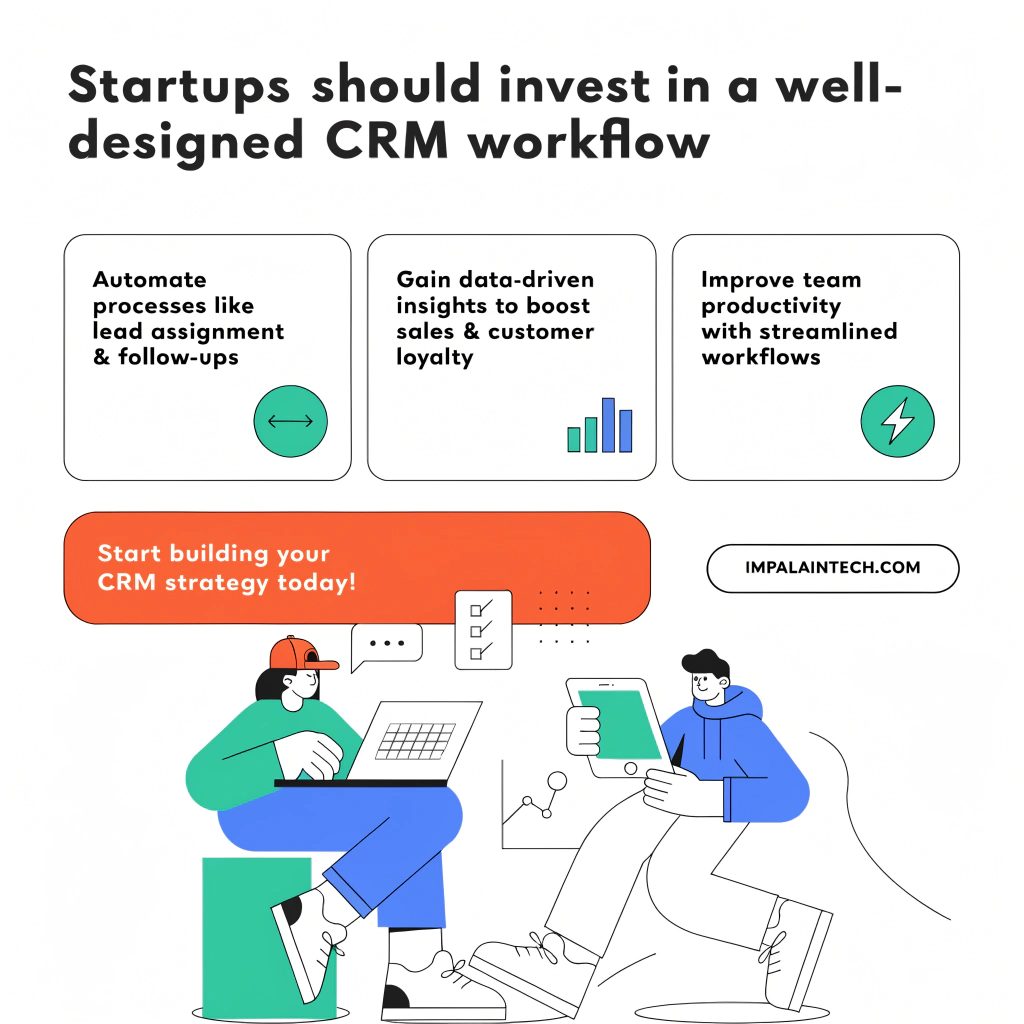
A clear workflow saves time and reduces errors. It helps teams manage leads more effectively and close deals faster.
Startups that build structure early avoid many problems later. They do not need to fix broken processes as they grow.
A well-designed CRM workflow also improves team performance. Everyone understands their role and follows the same process.
This consistency leads to better results.
FAQs

How can a CRM workflow support better decision-making for founders?
It provides clear data on lead movement, drop-offs, and conversions. Founders can use this data to adjust strategy and improve results.
Is it possible to test different sales approaches within a CRM workflow?
Yes, workflows can be adjusted to test different follow-up methods or stages. This helps identify what approach works best over time.
How does a CRM workflow help in managing high lead volume?
It organizes leads into clear stages and assigns actions automatically. This prevents overload and ensures no lead gets ignored.
Can a CRM workflow improve collaboration between sales and marketing teams?
Yes, both teams can access the same data. Marketing can see which leads convert, and sales can understand lead sources better.