

Real estate teams often collect many leads but close only a few deals. The gap sits in poor follow-up and scattered tools that do not talk to each other. One of our UK clients faced the same issue. His team worked hard, yet results stayed flat.
Leads came in every day from ads and property portals. Many of them never received a timely reply. Some leads slipped through the cracks. Others lost interest before the first call.
He needed a system that could connect everything. Not just store data, but move deals forward.
We built a custom solution to fix this. The focus stayed simple. Capture leads, respond fast, and guide each opportunity to closure. Let’s keep on reading to explore how we did this and how the results looked.
How we Helped a Real Estate Agent with his CRM and lead Generation System Work Together?
The client ran a growing agency in the UK. His team used different tools for ads, emails, and lead tracking. None of these systems worked together. Agents had to switch tabs and update data manually.
We started with a detailed review of his process. We tracked where leads came from, how fast agents replied, and what happened after the first contact. The numbers showed a clear problem. Most leads received replies after two hours or more. Research shows that leads contacted within five minutes are far more likely to convert.
We rebuilt the system step by step.
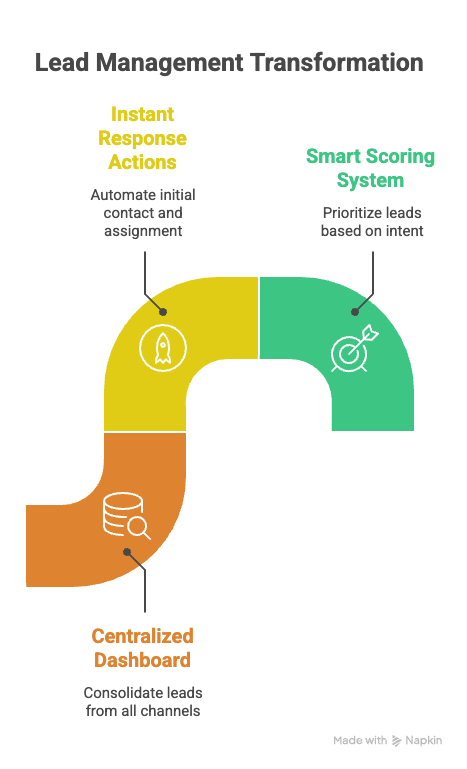
First, we created a single dashboard that captured leads from all channels. Facebook ads, website forms, and property portals all fed into one place. Each lead entered with key details already filled in. This removed manual entry and reduced errors.
Next, we set up instant response actions. Every new lead received a message within seconds. The system also assigned the lead to an agent and created a follow-up task. This simple change reduced response time from hours to minutes.
We then added a smart scoring system. Leads with higher intent moved to the top of the list. Agents could focus on people ready to act instead of guessing who to call first.
We also built a clear pipeline view. Each lead moved through stages such as new, contacted, interested, and closed. Managers could see progress at a glance.
After 90 days, the results showed real change. Response time dropped by 80 percent. Engagement improved across all channels. Conversion rate increased from 2.3 percent to just over 6 percent.
The client shared a simple line that stayed with us:
“The system did not add more work. It removed confusion.”
How can real estate CRM improve client communication and retention?
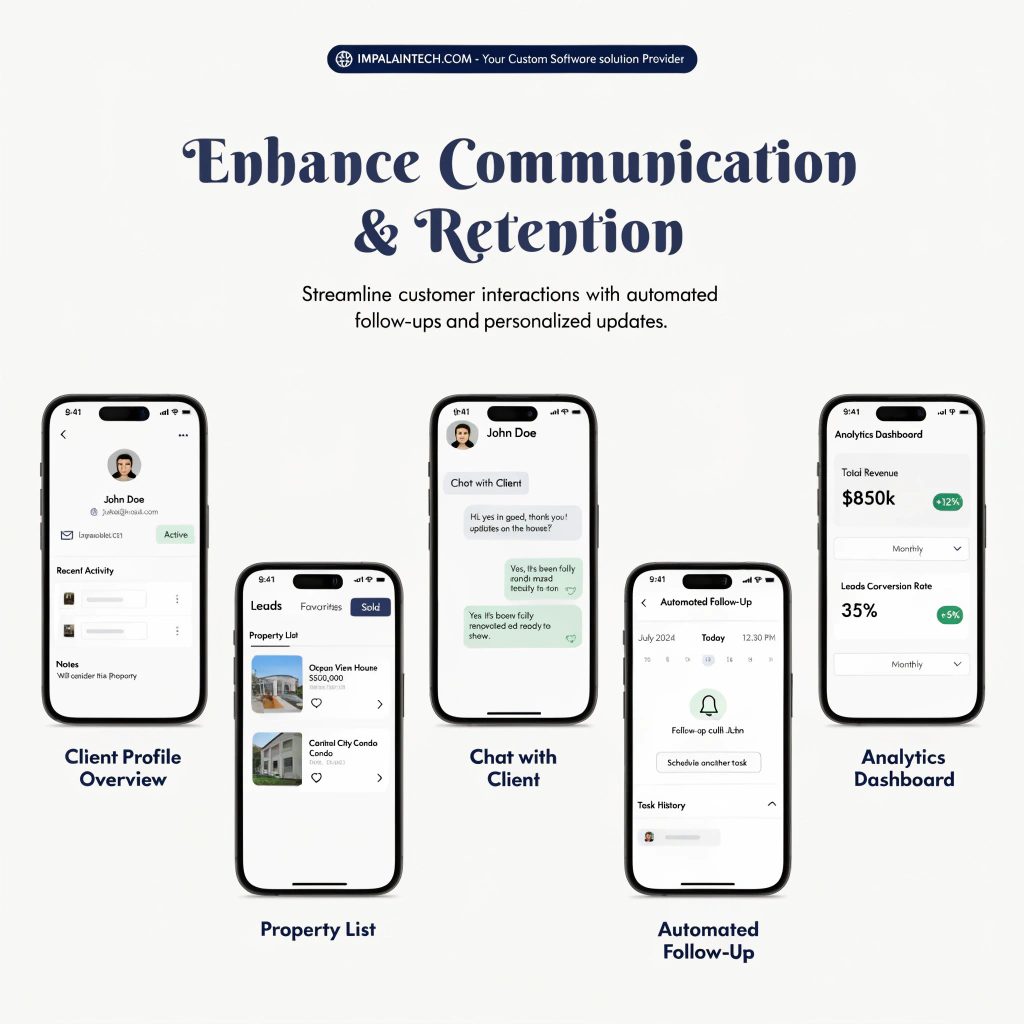
Good communication builds trust over time. A structured system helps teams stay consistent with every client.
Agents can view past conversations before making a call. This avoids repeated questions and helps them speak with context. Clients feel heard and understood.
Follow-ups also become more relevant. The system stores details such as budget, location, and property type. Agents send options that match real needs instead of random listings.
Reminders play a key role as well. Clients receive alerts for visits and calls, which reduces missed meetings. Over time, steady communication keeps buyers engaged even if they are not ready to decide yet.
Studies in service industries show that consistent follow-up can increase retention by more than 30 percent. Real estate works in a similar way.
Why you should go for custom solutions?
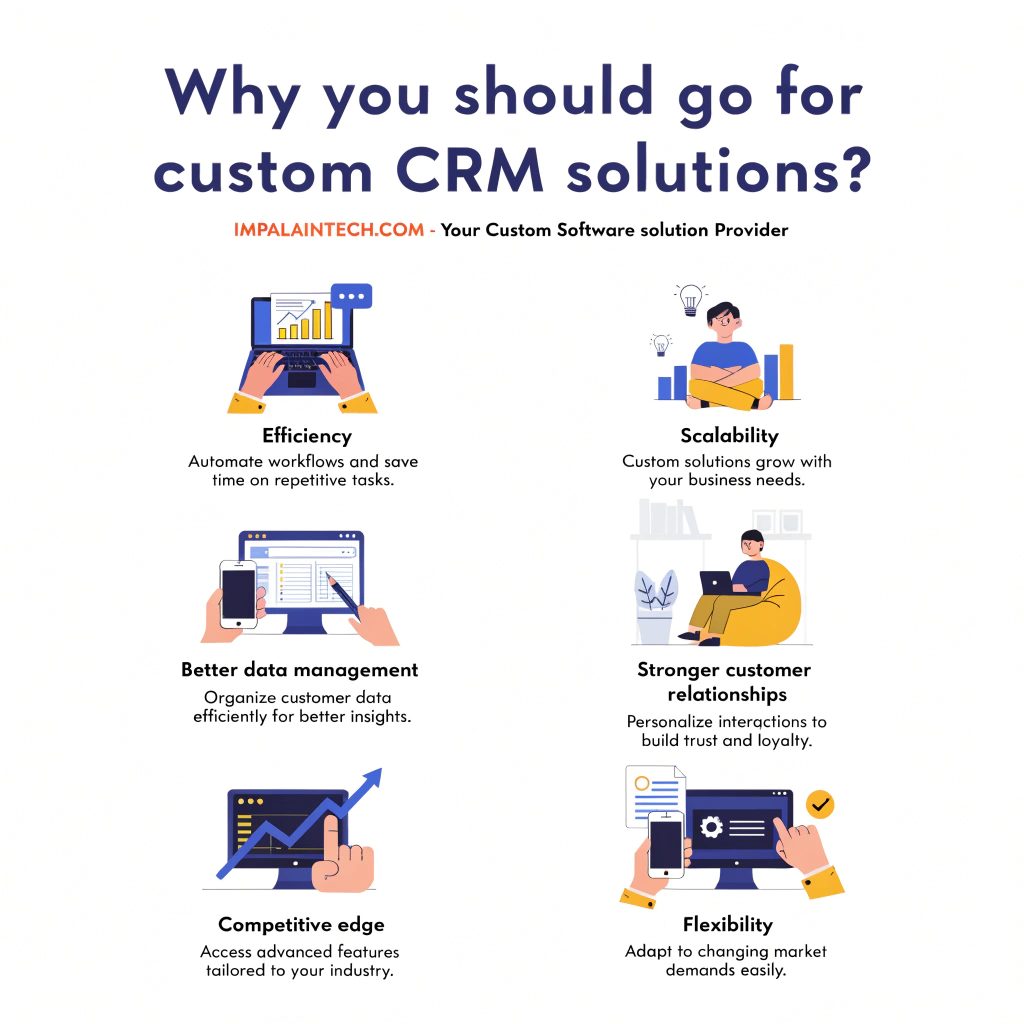
Many agencies start with ready-made tools. These tools offer general features but often fail to match real workflows. Teams end up adjusting their process to fit the tool.
Custom solutions take a different approach. They adapt to how your business already works.
A tailored system connects your lead sources, sales steps, and reporting needs without friction. It grows with your team and supports your exact process.
A UK agency director once said:
“We spent months adjusting to software. A custom system adjusted to us in weeks.”
That difference saves both time and effort. It also reduces the learning curve for new agents.
What are the top-rated CRM systems for UK estate agents?
Many agencies in the UK rely on established platforms. Each one serves a different type of team.
| CRM System | Best For | Notes |
|---|---|---|
| Reapit | Large agencies | Strong links with property tools |
| Dezrez | Mid-size teams | Good workflow features |
| Zoho CRM | Flexible use | Works well with custom builds |
| HubSpot | Marketing focus | Strong for inbound leads |
| Salesforce | Enterprise teams | High cost, very powerful |
These tools can perform well with proper setup. Still, many agencies extend them with custom features to meet their needs.
How Can We Provide Affordable CRM Solutions for Small Real Estate Agencies in the UK?

Small agencies often avoid custom systems due to cost concerns. Many believe these solutions are only for large firms.
We approach this in a simple way. Build only what the business needs at the start. Add more features over time as the team grows.
This keeps the initial investment low. It also helps teams learn the system step by step.
A basic setup can include lead capture, response automation, and a clear pipeline view. Even this small structure can improve performance quickly. As results grow, new features can be added without rebuilding the system.
The role of lead generation strategies in long-term growth
A strong system needs a steady flow of leads. Without this, even the best setup cannot deliver results.
Digital channels now play a major role. Many buyers begin their search online before speaking to an agent. This makes SEO and content important.
A real estate website that focuses on helpful content can attract high-intent visitors. These visitors often convert better because they already have clear needs.
Paid ads also bring quick results, but they require proper tracking. A connected system helps measure which channels bring the best leads.
How automation improves speed without losing the human touch
Automation often raises one concern. Will communication feel robotic?
The answer depends on how it is used.
Simple and clear messages work best. A quick reply that confirms interest can make a strong first impression. After that, agents take over with personal communication.
Automation handles routine tasks in the background. It sends reminders, assigns leads, and tracks actions. Agents then spend more time building relationships instead of managing data.
Data tracking and reporting for smarter decisions
A structured system provides clear data. This data helps leaders understand what works and what needs change.
Managers can see which lead sources bring the most value. They can track how agents perform and how long deals take to close.
These insights guide better decisions over time. Instead of guessing, teams act based on real numbers.
Mistakes to avoid while building a CRM system
Many companies face issues during setup. Most problems come from over-complication.
Some teams try to include too many features at once. This creates confusion and slows adoption. Others skip training, which leads to poor usage.
A simple system with clear steps works better. Teams learn faster and use it more often. That consistency leads to better results.
Future trends in real estate CRM and lead generation
Technology continues to shape this space. New tools focus on speed and user experience.
AI now helps rank leads based on behavior. Chat tools handle first contact with quick replies. Mobile access allows agents to manage leads from anywhere.
These changes make systems faster and more flexible. Teams that adapt early often stay ahead in a competitive market.
Final thoughts
A working system does not rely on tools alone. It depends on clear structure and daily use.
Our client achieved better results without increasing lead volume. The change came from better handling of existing opportunities.
Real estate teams that focus on speed, clarity, and follow-up tend to close more deals. A well-built system supports this process every day.
FAQs

Can small agencies afford custom solutions?
Yes. A phased approach allows teams to start small and expand over time.
Do automated messages reduce personal connection?
Not if written well. Clear and simple messages often improve response rates.
What is the biggest factor in lead conversion?
Fast response and consistent follow-up have the strongest impact.
Is training necessary for the team?
Yes. Short and simple training helps agents use the system effectively.